ECO-DESIGN, THE DNA OF DESIGN
25.02.2026

From Disposable to Durable: When Design Embraces Low-Tech and Eco-Design
Faced with the climate emergency and the depletion of resources, the designer’s role is undergoing a profound change. Long seen as the armed wing of consumer society, today’s designer is reinventing their practice through eco-design. Far from being a simple environmental checklist, this holistic approach questions the entire life cycle of an object.
To go further than simply cutting carbon, one philosophy is gaining ground in design studios: the low-tech approach.
Eco-design and the Low-Tech philosophy
Eco-design means taking environmental impacts into account from the drawing and R&D stage of a product . Low-tech, for its part, brings three fundamental pillars to this approach: usefulness, durability and simplicity.
For a designer, embracing low-tech means designing objects that are repairable and energy-efficient, made from local materials, and whose technical workings remain transparent to the user. It is the art of doing “better with less”.
The Founding Fathers: Victor Papanek’s Revolutionary Vision
It is impossible to talk about this awakening without mentioning Victor Papanek (1923-1998). As early as the 1970s, in his cult book Design for the Real World, this Austrian-American designer and theorist laid the foundations for a socially and ecologically responsible design.
Papanek lambasted purely aesthetic or commercial design, which he considered irresponsible. He advocated solutions that met people’s real needs, often using salvaged materials.
“Design has become the most powerful tool with which man shapes his tools and environments (and, by extension, society and himself). This demands high social and moral responsibility from the designer.”– Victor Papanek
Among other things, he co-designed a radio made from a simple used tin can and powered by a candle as its heat source (via a thermocouple). A pioneering and radical example of what we now call low-tech: repairable, accessible and free from planned obsolescence.
The Modern Application: Tamim Daoudi and the Spartha Medical Project
Today, this philosophy is no longer confined to humanitarian or craft design; it is finding its way into the most demanding sectors, such as healthcare. The work of Strasbourg-based designer Tamim Daoudi is a perfect illustration.
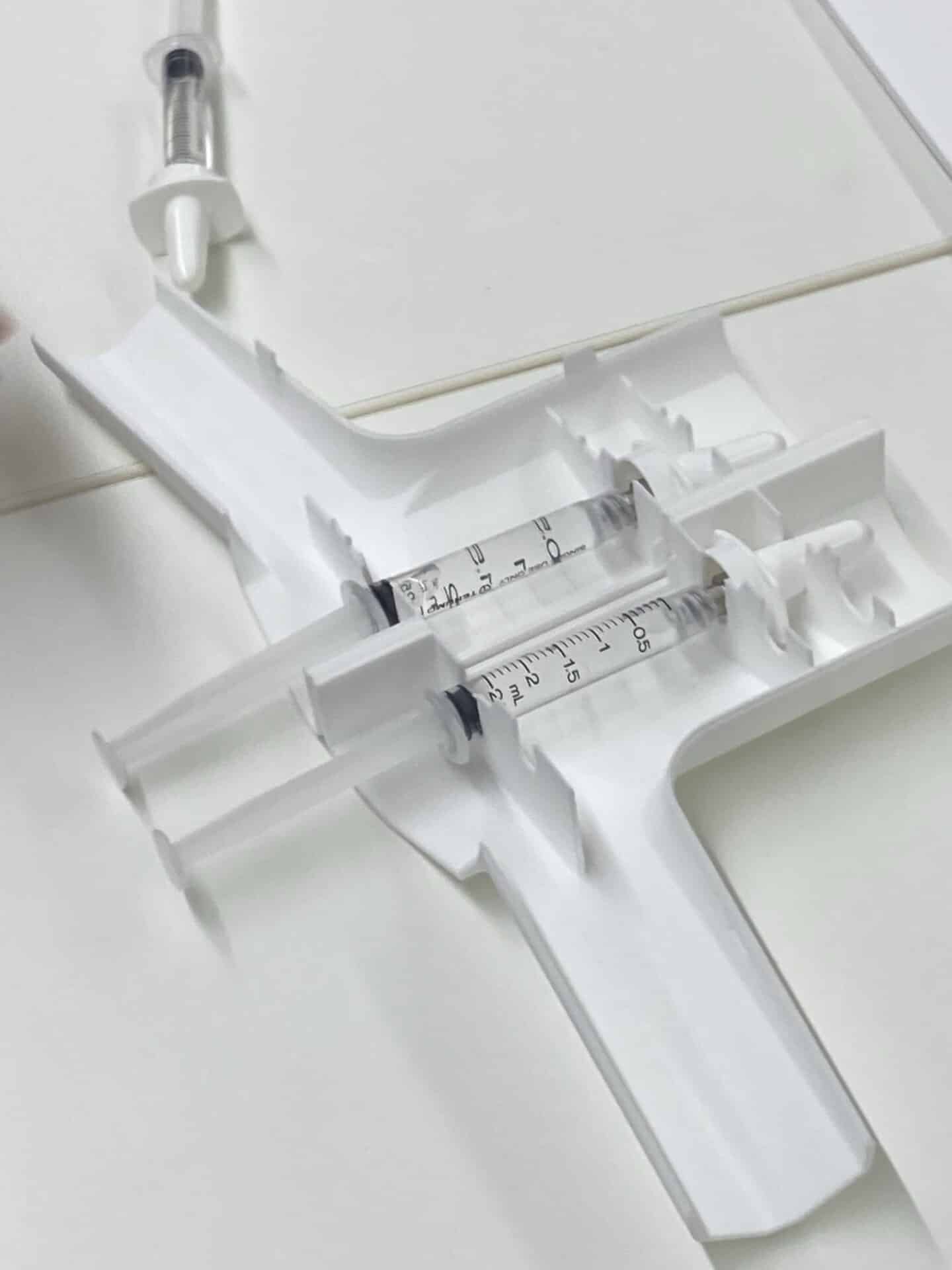
For the start-up Spartha Medical, which specialises in antibacterial and antiviral coatings, Tamim Daoudi designed an innovative surgical sprayer for operating theatres.
Why is this project a textbook case of low-tech eco-design?
-
Rejecting unnecessary electronics: Where the industry would naturally have built in batteries, chips or connected sensors (generating electronic waste and requiring recharging), the device uses a purely manual mechanical system.
-
Just enough technology: The movement of the surgeon or assistant is enough to operate the pressurisation mechanism reliably and consistently, ensuring an even spray without any external power source.
-
Easy disassembly and recyclability: The device is designed to be taken apart easily at the end of its life, avoiding the complex bonded two-shot plastic mouldings that make recycling impossible.
By applying the clean aesthetics of industrial design to the restraint of manual mechanics, Tamim Daoudi shows that low-tech is not a step backwards but a rigorous form of optimisation.
Summary: The levers available to the eco-low-tech designer
To sum up the contemporary design method, the designer relies on a strict analysis grid:
| Life cycle stage | Eco-design / Low-tech approach |
| 1. Sourcing | Priority given to mono-materials, and to bio-based or locally recycled materials. |
| 2. Production | Fewer parts (simpler moulds) and no adhesives. |
| 3. Use | Zero passive energy consumption, mechanical or passive operation. |
| 4. End of life | Full disassembly with standard tools to make repair and recycling easier. |
In conclusion, eco-design combined with low-tech forces designers to stop designing an object for what it looks like, and to design it for what it does and what it becomes. From Papanek to Daoudi, the conclusion remains the same: the smartest design is often the one that knows how to step aside in favour of simplicity and common sense.