MEDICAL DEVICE DESIGN OFFICE
OUR MEDICAL DEVICE DESIGN OFFICE SUPPORTS THE DESIGN OF INTUITIVE MEDICAL DEVICES FOR HEALTHCARE PROFESSIONALS AND PATIENTS ALIKE, CONCEIVED FROM THE OUTSET FOR SAFE USE AND INDUSTRIALISATION.
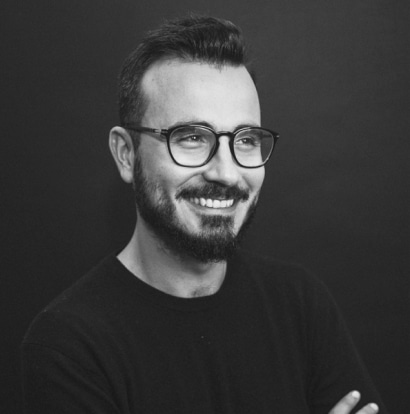
Tamim DaoudiIndustrial designer · Strasbourg
MEDICAL DESIGN, A DISCIPLINE CENTRED ON USE
A medical device is rarely used in ideal conditions. It is handled by healthcare professionals under time pressure, sometimes wearing gloves, by laboratory technicians running one analysis after another, or by patients and carers who have received no training.
Medical design starts from these real-life situations. It translates clinical, technical and regulatory requirements into an object that can be understood at first glance and is simple to handle, clean and maintain, and that limits the risk of use error.
The Tamim Daoudi studio applies to the healthcare sector the approach it takes with any industrial product. The five pillars that frame each of its projects take on a particular dimension here:
- Ergonomics: controls, markings and feedback that guide users with very different profiles without ambiguity;
- Economy: a cost price compatible with your market and processes suited to your volumes;
- Aesthetics: a clear identity, reassuring for patients and credible to healthcare professionals;
- Environment: an object designed for its place of use, whether a laboratory, a hospital room, a practice or the home;
- Ecology: an eco-design approach, for example by relying on standard components rather than multiplying specific parts.
WHY INTEGRATE DESIGN FROM THE START OF MEDICAL DEVICE DEVELOPMENT?
In the healthcare sector, ergonomics is not just a sales argument. Regulation (EU) 2017/745 on medical devices requires the manufacturer to reduce as far as possible the risks related to use errors, taking into account the ergonomic features of the device, its environment of use and the profile of the intended users. The IEC 62366-1 standard describes the corresponding process: usability engineering, which relies on evaluations carried out with representative users.
Involving an industrial designer from the earliest stages of design allows you to:
- identify risky use situations early and correct them on a model rather than after the tooling has been made;
- have models and prototypes to test the device with users at each iteration;
- anticipate material, cleaning and manufacturing constraints;
- control the cost price by integrating production processes from the design stage;
- obtain a distinctive device that its users adopt easily.
Regulatory compliance and CE marking remain the manufacturer’s responsibility. The studio works alongside you, in dialogue with your R&D, quality and regulatory affairs teams, so that design serves these requirements instead of being constrained by them.
THE STAGES OF MEDICAL DEVICE DEVELOPMENT WITH OUR DESIGN OFFICE
Our approach follows the main phases of any industrial design project, aligning them with the requirements specific to the medical sector:
- Scoping and specifications: together we define the intended use, the user profiles, the use environments, the technical constraints and applicable standards, the volumes and the target cost. The designer’s six questions (for whom, why, how, how much, when, where) structure this discussion.
- Research and creative directions: sketches, 3D models and photorealistic renderings explore three design directions, already technically framed with a partner engineering design office.
- Models and user testing: appearance models, made by the studio from lightweight materials and by 3D printing, then functional prototypes, are handled by users. Their feedback guides the iterations and can feed into the formative evaluations provided for in IEC 62366-1.
- Development and design for manufacturing: the chosen direction is optimised with engineering, taking into account manufacturing processes, materials and assembly.
- Industrialisation: we follow the successive prototypes through to pre-series and remain the guarantors of the design you have chosen.
Depending on your organisation, the studio’s deliverables (sketches, drawings, 3D models, test feedback) can be added to the design and development file you maintain as part of your quality management system, for example under ISO 13485.
Allow 4 to 6 months for a typical project, and up to a year for a complex device.
WHY ENTRUST THE MEDICAL DESIGN OF YOUR DEVICE TO THE TAMIM DAOUDI STUDIO?
Because the studio works with medtech and diagnostics companies and knows what these projects demand: high standards of usability, numerous iterations and the need to stay on course all the way to industrialisation.
A few projects completed in the healthcare field:
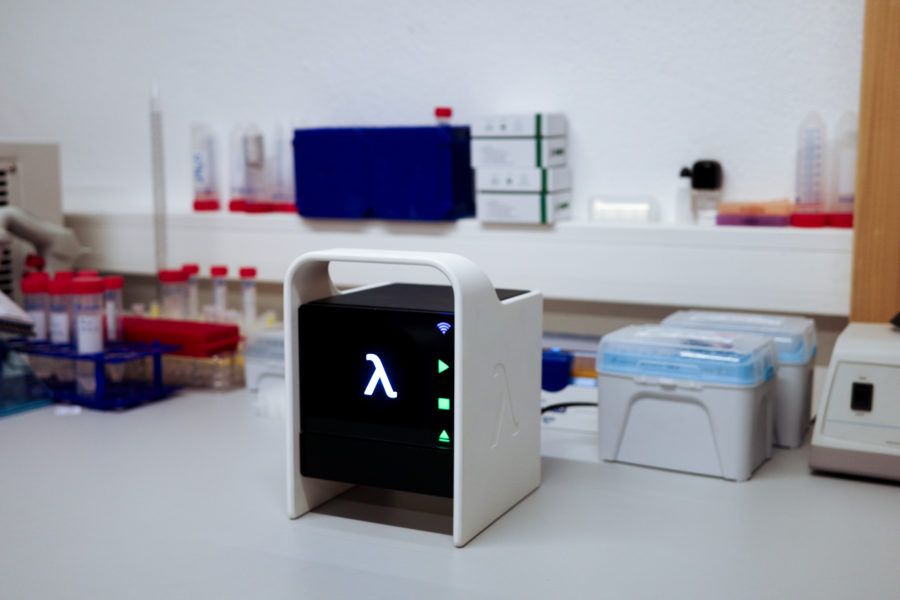
- Red One™ for Redberry: a cytometry platform that performs a microbial analysis in 10 minutes, winner of a Janus award (Health). See the Red One project
- Poly-D-Tech: a compact, scalable rapid immunoassay reader with a handle, designed, developed and produced in France.
- Spartha Medical: a low-tech medical vaporiser, with no battery or electronics, which relies on existing components (syringes, connectors, nozzles) and meets clinical standards. See the Spartha project
- MBS Industry harness: a harness designed with Aventure Verticale, intuitive and easy to put on, which in particular keeps people with disabilities safe.
You also benefit from an award-winning industrial designer (Red Dot Design Award, Janus awards for Industry and Health), a network of engineering design offices, prototype makers and manufacturers, and a single point of contact from specifications to production. The studio works exclusively in B2B, throughout France, and its Bpifrance expert status allows SMEs to have 50% of a Bpifrance Design Diagnosis (Diag Design) funded.

Where does Tamim Daoudi offer medical device design?
Based in Strasbourg, the studio is not tied to one region: Tamim Daoudi works with companies all over France on their medical device design projects. He comes to your premises for the key stages (scoping workshops, design reviews, user testing, follow-up at the manufacturer’s) and runs the rest of the project remotely, just as responsively.
He works throughout France, including in Paris, Lyon, Marseille, Toulouse, Nice, Nantes, Montpellier, Strasbourg, Bordeaux, Lille, Rennes, Reims, Toulon, Saint-Étienne, Le Havre, Grenoble, Dijon, Angers, Nîmes, Clermont-Ferrand, Aix-en-Provence, Brest, Tours, Amiens, Limoges, Metz, Besançon, Perpignan, Orléans, Rouen, Mulhouse, Caen and Nancy.
Wherever you are, a first video call is enough to scope your needs.
Contact meFrequently asked questions: medical device design office
What is a medical device design office?
It is an industrial design practice that supports manufacturers in designing medical devices and healthcare equipment. It starts from real-world use, by healthcare professionals, patients and technicians, to define the product’s ergonomics, architecture and appearance, in conjunction with engineering. Its role: to make the device intuitive, limit use errors and facilitate its industrialisation, without taking over the manufacturer’s regulatory responsibilities.
What is the designer’s role in the design of medical devices?
The industrial designer translates clinical needs and technical constraints into a usable object. They analyse users’ gestures, formalise use requirements in the specifications, propose directions as sketches and in 3D, then produce models and prototypes for user testing. They work in concurrent engineering with the technical design office, so that every choice of form remains manufacturable and compatible with the device’s requirements.
What is usability engineering according to IEC 62366-1?
The IEC 62366-1 standard describes the process by which the manufacturer analyses, specifies, designs and evaluates the user interface of a medical device from a safety perspective. It is based on use scenarios, formative evaluations throughout the design process and a final summative evaluation. The designer’s work, with its models, prototypes and user tests, naturally fits into the formative evaluations.
Who is responsible for the regulatory compliance of the device?
The manufacturer. Within the meaning of Regulation (EU) 2017/745, it is the manufacturer who draws up the technical documentation, demonstrates conformity with the general safety and performance requirements and affixes the CE marking, with the involvement of a notified body depending on the class of the device. The studio acts as a design service provider: it contributes use-related solutions and design deliverables that your quality and regulatory teams incorporate into their file.
When should you bring in a designer for a medical device?
As early as possible, ideally from the drafting of the specifications. This is the stage at which the product architecture, the user gestures and the main material choices are decided. Getting involved early makes it possible to detect risky use situations on a model, before committing to costly tooling, and to avoid redesigning a device late in the process, when evaluations with users reveal a problem.
How much does a design study for a medical device cost?
Each project is quoted according to its complexity. As a guide, a design study is offered at €13,000 excl. VAT, models at €5,000 excl. VAT and industrialisation support at €8,000 excl. VAT. For SMEs, the Bpifrance Design Diagnosis (Diag Design, €4,000 excl. VAT, 50% funded) is a lower-cost way to get started. Details are on the Offers page.
Do you make prototypes for user testing?
Yes. The studio makes its own appearance models, from lightweight materials and by 3D printing, to validate volumes, handling and legibility. For functional prototypes incorporating mechanics or electronics, we rely on our network of mechatronics partners and prototype makers. These prototypes undergo user testing, which we follow ourselves, until a final version is validated.
Which medtech projects has the studio completed?
The studio’s projects include the Red One™ cytometry platform for Redberry, winner of a Janus award (Health), the Poly-D-Tech rapid immunoassay reader, designed, developed and produced in France, and the Spartha Medical low-tech medical vaporiser. With Aventure Verticale, it also designed the MBS Industry harness, intended in particular to keep people with disabilities safe.