DESIGN ENGINEERING
DESIGN ENGINEERING BRINGS DESIGNERS AND ENGINEERS TOGETHER FROM THE SPECIFICATIONS STAGE TO CREATE INNOVATIVE PRODUCTS THAT CAN BE MANUFACTURED AND ARE ECONOMICALLY VIABLE.
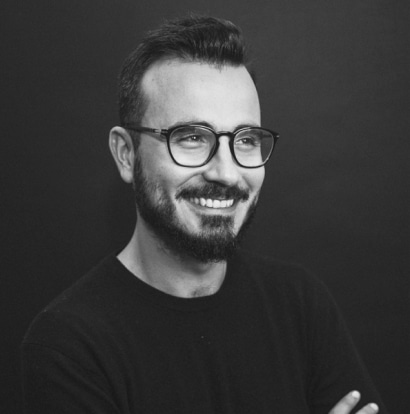
Tamim DaoudiIndustrial designer · Strasbourg
Design studies how products are used: it puts the user at the centre of the thinking and anticipates their needs while respecting economic, ergonomic, aesthetic, ethical and ecological constraints. Eco-design lies at the very heart of its approach.
Product engineering develops the technical solutions that meet specifications ranking the project’s constraints and standards. It turns the solutions that come out of design into a tangible reality that is feasible, economically viable and ready for industrialisation.
Design engineering brings these two areas of expertise together in a single product design process: instead of handing the project over from one to the other, designers and engineers work together from the first sketch through to production. This approach is particularly well suited to technical products such as connected devices, medical devices or industrial equipment, where use, mechanics, electronics and manufacturing cost are closely linked.
WHY CHOOSE DESIGN ENGINEERING FOR YOUR PRODUCT?
Design and engineering are two complementary skills: one imagines tomorrow’s solutions, the other makes sure they are technically and economically viable. Brought together early in the project, they allow you to:
- de-risk development by validating the feasibility of each design direction very early on;
- control the cost price by building manufacturing processes into the design from the outset (design to cost);
- shorten time to market by avoiding back-and-forth between the designer and the design office;
- anticipate the standards and certification specific to your sector;
- end up with a distinctive, ergonomic and durable product.
This combination takes you through to industrialisation with peace of mind.
HOW IS DESIGN ENGINEERING APPLIED TO YOUR PROJECT?
From the moment the specifications are drafted, designers and engineers work in concurrent engineering, each feeding into the other’s proposals. The designer develops ideas in response to the constraints, and the engineer validates or redirects them until a credible, coherent proposal emerges.
- Specifications: uses, technical constraints, standards, volumes and target cost are prioritised together.
- Research and concepts: sketches, models and 3D renderings are already framed by technical and economic constraints.
- Development: the chosen direction is optimised in CAD, prototyped and tested with users.
- Industrialisation: the design office finalises the design and supports the tooling stage through to the pre-series.
Because the design direction selected with you has already been validated technically and economically, the design office can then take you through to production far more efficiently. We stay involved throughout the project to safeguard the chosen design.
DESIGN ENGINEERING PROJECT EXAMPLE: THE CAPTAG CONNECTED BADGE
The Captag connected badge was developed in collaboration with Scalea Innovation, a mechatronics design office in the Tamim Daoudi studio’s network.
Engineering made it possible to validate and guarantee the feasibility, development and industrialisation of the design. The result: a more compact product that looks light and is suited to visually impaired people. A distinctive, recognisable design.
Captag appreciated this synergy from the very start of the design and engineering support: the company felt reassured and confident in the process. Designed and manufactured in France, the product has now been industrialised and is distributed in France and internationally. See the Captag project


WHY ENTRUST THE DESIGN ENGINEERING OF YOUR PRODUCT TO THE TAMIM DAOUDI STUDIO?
Because over more than 15 years of practice, the studio has built up a network of qualified, proven engineering design offices. We are used to bringing engineering into the support we provide to our clients, we know how to work with these teams, and we believe the success of your project depends on combining complementary skills that can talk to each other and learn from one another.
In practical terms, you benefit from:
- a single point of contact, from specifications to production;
- an award-winning industrial designer (Red Dot Design Award, Janus awards for Industry and Health);
- experience with technical and regulated products: connected devices, medical devices, industrial equipment;
- Bpifrance expert status, which allows a Bpifrance Design Diagnosis (Diag Design) to be 50% funded.

Where does Tamim Daoudi offer design engineering?
Based in Strasbourg, the studio is not tied to one region: Tamim Daoudi works with companies all over France on their design engineering projects. He comes to your premises for the key stages (scoping workshops, design reviews, user testing, follow-up at the manufacturer’s) and runs the rest of the project remotely, just as responsively.
He works throughout France, including in Paris, Lyon, Marseille, Toulouse, Nice, Nantes, Montpellier, Strasbourg, Bordeaux, Lille, Rennes, Reims, Toulon, Saint-Étienne, Le Havre, Grenoble, Dijon, Angers, Nîmes, Clermont-Ferrand, Aix-en-Provence, Brest, Tours, Amiens, Limoges, Metz, Besançon, Perpignan, Orléans, Rouen, Mulhouse, Caen and Nancy.
Wherever you are, a first video call is enough to scope your needs.
Contact meFAQ: your questions about design engineering
What is design engineering?
Design engineering is a product design approach in which industrial designers and engineers work together from the specifications stage. Design brings the product’s use, ergonomics and identity; engineering ensures its technical feasibility, its compliance with standards and its manufacturing cost. The result: an innovative, desirable product that can genuinely be industrialised.
What is the difference between an industrial designer and an engineer?
The engineer holds the technological expertise: they make sure the product works properly, is reliable and can be produced. The industrial designer starts from how the product is used: they design its ergonomics and aesthetics and make its functions easy to understand for the end user. The two professions are complementary, and design engineering is precisely about having them work at the same time rather than one after the other.
When should you bring in design engineering?
As early as possible, ideally when the specifications are being drafted. This is the stage at which choices of architecture, materials and processes commit most of the cost and lead time. Getting involved early avoids having to redesign a product that is attractive but impossible to manufacture, or one that works but that users shun.
Do you work with a design office?
Yes. The studio relies on a network of qualified mechanical and mechatronic engineering design offices, such as Scalea Innovation on the Captag project. Depending on your project, we work with our partner or with your own design office, and remain the point of contact who safeguards the design through to production.
How much does a design engineering project cost?
Each project is quoted according to its complexity. As a guide, a design study is offered at €13,000 excl. VAT and industrial support at €8,000 excl. VAT. For SMEs, the Bpifrance Diag Design (€4,000 excl. VAT, 50% funded) is a lower-cost way to get started. Details are on the Offers page.
How long does a design engineering project take?
Allow 4 to 6 months in general, and up to a year for the most complex products, such as a medical device or a mechatronic product. The duration depends on the number of iterations, the prototypes required and the certification constraints.
Which sectors and types of product do you work on?
The studio works exclusively in B2B, for start-ups, SMEs and large groups in industry, medtech and deeptech: connected devices, medical devices, industrial equipment, lighting. Past projects include the Captag connected badge, the Red One platform for Redberry and the Spartha medical vaporiser.
Do you work throughout France?
Yes. The studio is based in Strasbourg but has no regional ties: Tamim Daoudi travels throughout France for the key stages of the project and handles follow-up remotely the rest of the time.


