PRODUCT DESIGN AND ENGINEERING OFFICE
OUR PRODUCT DESIGN AND ENGINEERING OFFICE ENHANCES YOUR PROJECT THROUGH USE, ERGONOMICS AND AESTHETICS, STARTING FROM THE TARGET USER AND THEIR ENVIRONMENT AND GOING ALL THE WAY TO A PROTOTYPE READY FOR INDUSTRIALISATION.

Tamim DaoudiIndustrial designer · Strasbourg
WHAT IS A PRODUCT DESIGN AND ENGINEERING OFFICE?
A product design and engineering office first seeks to understand the needs of the people who will use your future product. It frames this need by formulating a precise problem statement, then derives solutions suited to your particular set of constraints.
At the Tamim Daoudi studio, this approach is driven by industrial design: it enhances your project in terms of use, ergonomics and aesthetics, while remaining grounded in the technical and economic reality of manufacturing.
Before any sketching begins, the designer asks six preliminary questions:
- For whom? Who is the end user, and in what context do they use the product?
- Why? Does the project genuinely address the user’s needs?
- How? What resources need to be put in place to deliver the solution?
- How much? What production cost is acceptable for this solution?
- When? What is the schedule for the deliverables?
- Where? Where will the solution be deployed?
The answers feed into the five pillars that frame the entire product design process:
- Ergonomics: an intuitive approach to the product for the user;
- Economics: control over the solution’s production costs;
- Aesthetics: a distinctive, recognisable product;
- Environment: an object suited to its context of use;
- Ecology: an eco-design approach built in from the start.
This is how design creates strong added value: it makes your product simple, intuitive, distinctive and long-lasting.
HOW DOES A PROJECT WITH A PRODUCT DESIGN AND ENGINEERING OFFICE WORK?
It all starts with a conversation about your project and a joint review of your specifications. This document is essential: it frames the design study from the outset, and it can evolve during development and industrialisation. Before the design work begins, we always bring in an engineering design office, which validates the technical feasibility and economic viability of the directions explored.
1. The research phase: three creative directions
We present three distinct design proposals, built from:
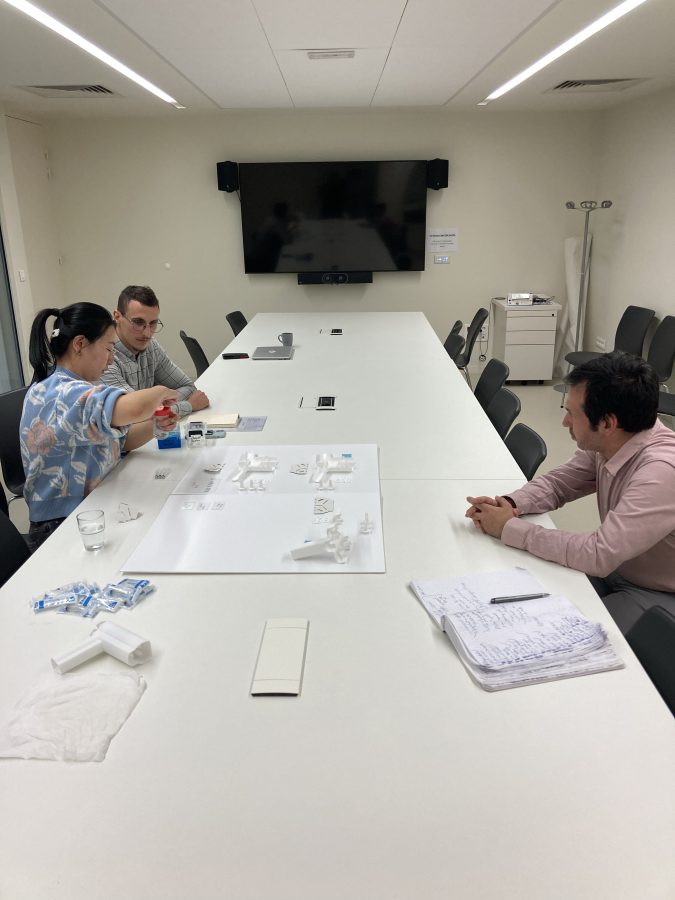
- brainstorming sessions and co-creation with you and your users;
- sketches;
- 3D modelling and photorealistic renderings;
- general arrangement drawings.
The aim: to reach a decision with you on one solution, or on a hybrid of several directions. This decision opens the development and industrialisation phase.
2. The development and industrialisation phase
With one of our partner engineering design offices, the chosen direction is optimised for manufacturing and adapted to the production processes. This is the design for manufacturing (DFM) approach: finding the most appropriate solutions in terms of cost, manufacturability and scaling up.
This stage is iterative: it involves building prototypes, which are tried out by users and put through the tests required by the standards in your sector. Brainstorming sessions, co-creation with you, your users and the engineers, sketches, 3D modelling and renderings accompany each iteration. Throughout this phase, the design office remains the guardian of the design you chose in the research phase.
It leads to the final version of a prototype that meets the needs of industrialisation. The industrial study then adapts this prototype to the production line: this is the purpose of our industrialisation support .
WHAT ARE THE BENEFITS OF A PRODUCT DESIGN AND ENGINEERING OFFICE FOR YOUR INDUSTRIAL PRODUCTS?
Bringing a product design and engineering office into your project guarantees step-by-step support that de-risks every key moment. In practical terms, we:
- define your specifications with you, prioritising uses, technical constraints, standards, volumes and target cost;
- understand and precisely target the end user’s needs, through co-creation with your users;
- find and bring in the complementary skills your project needs: mechanical engineering, mechatronics, prototyping, manufacturing;
- involve you in every decision: you play an active part in the development of your product, from the chosen direction to the final prototype.
These points are the keys to a new product’s success. They avoid two common pitfalls in industrial product design: an attractive object that cannot be manufactured at the right cost, or a technically accomplished product that its users struggle to adopt. By combining design and engineering from the outset, the direction you validate is already framed technically and economically, which secures the rest of the development.
PRODUCT DESIGN EXAMPLE: THE SPARTHA MEDICAL VAPORISER
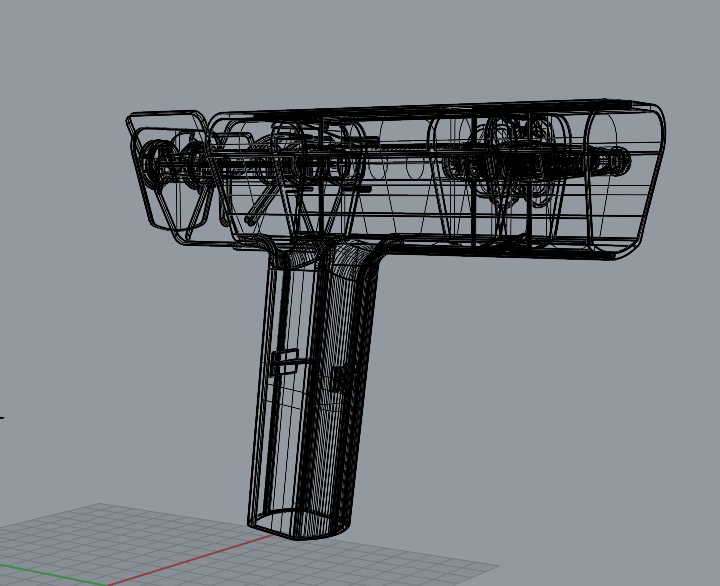
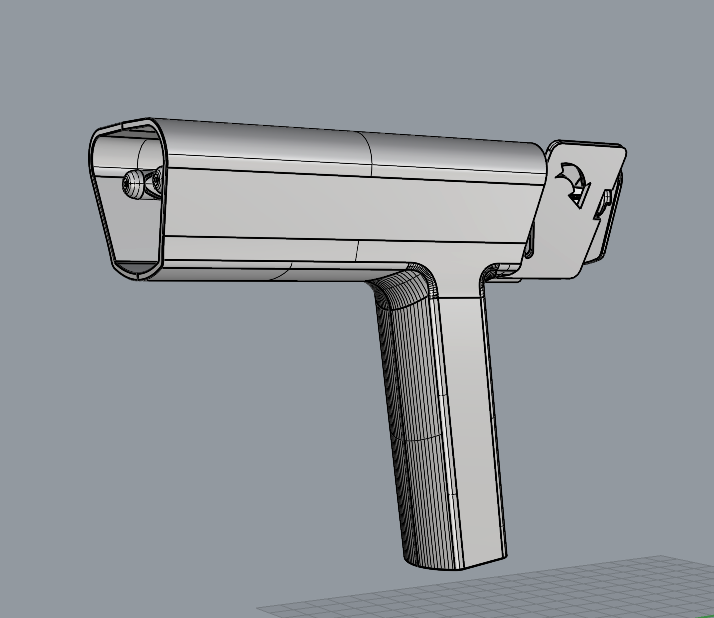
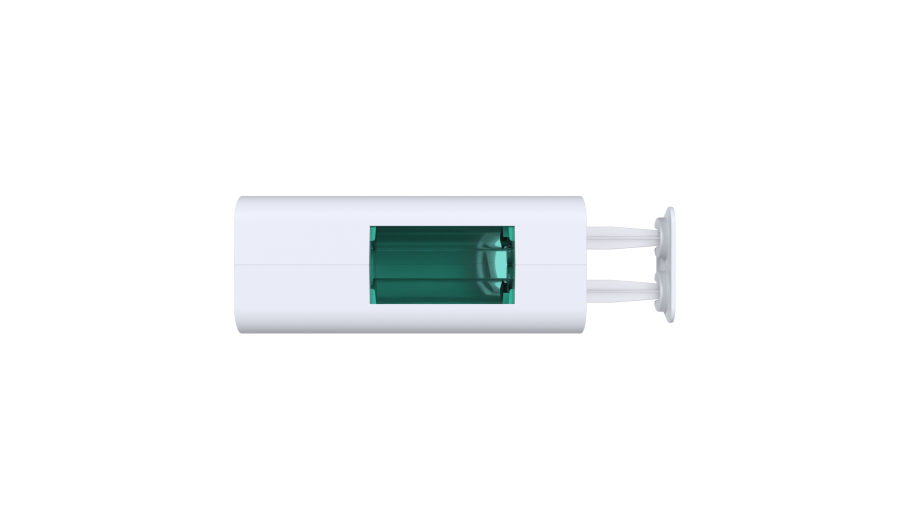
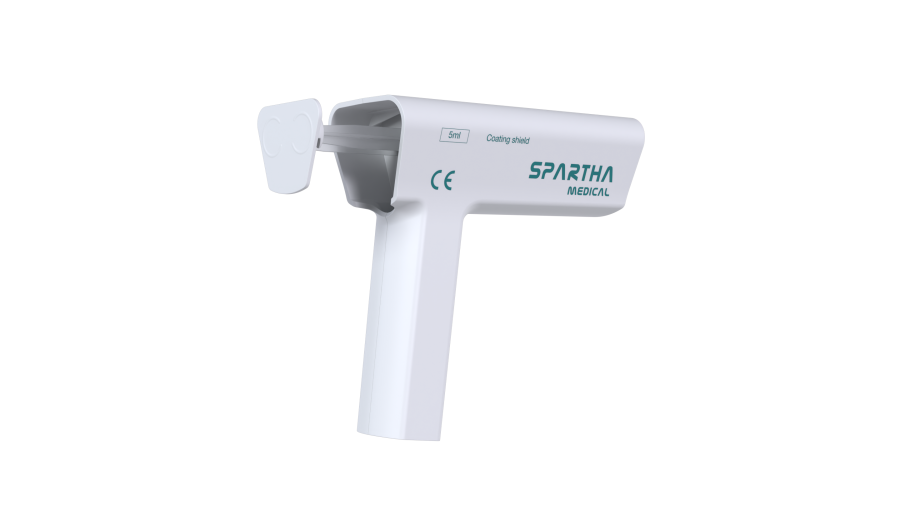
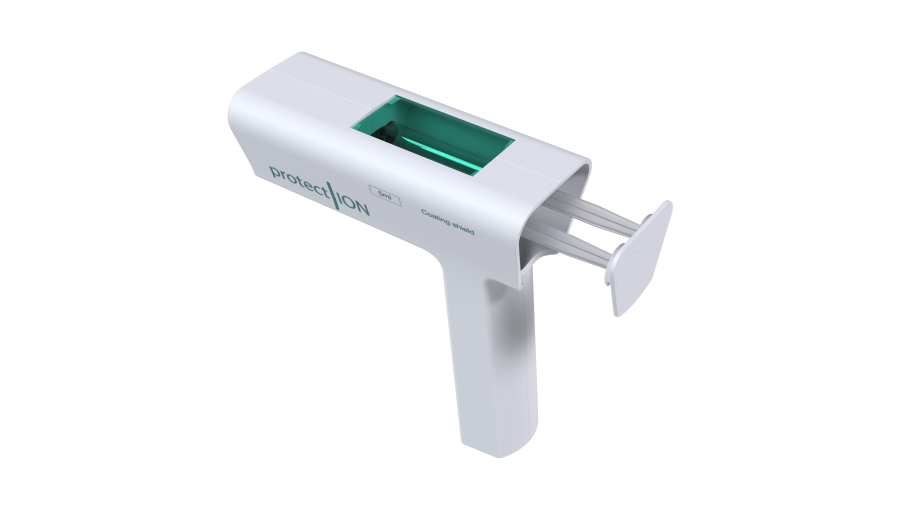
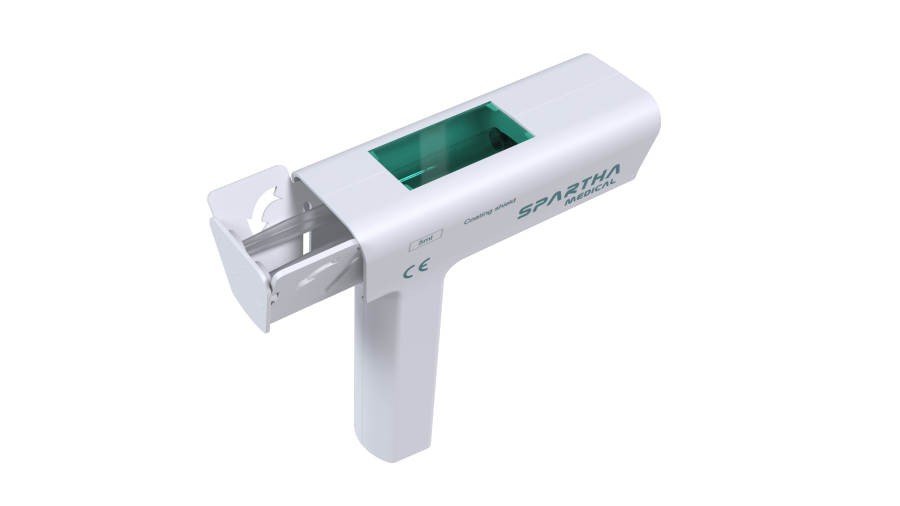
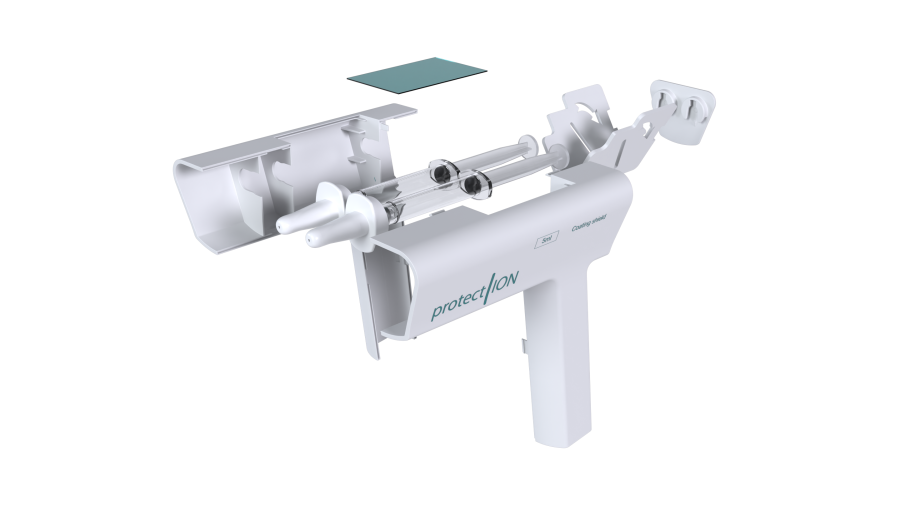
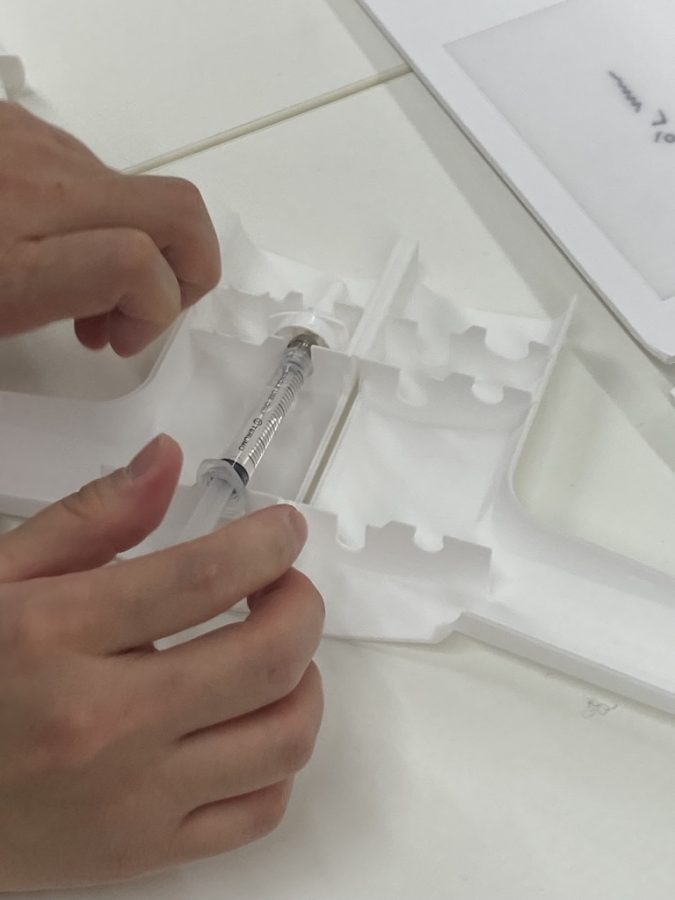
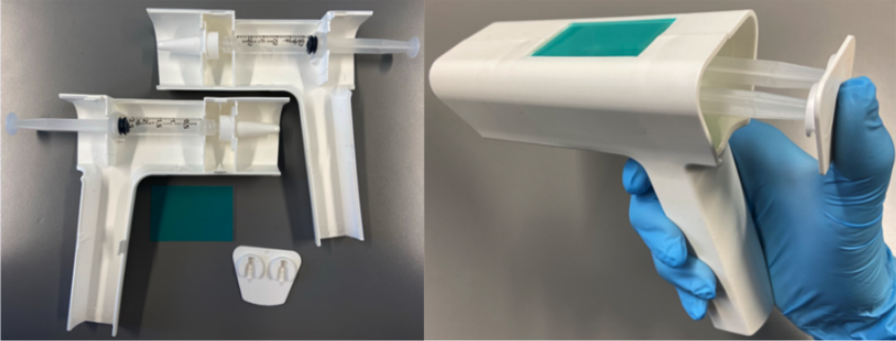
The medical vaporiser designed for Spartha Medical illustrates each stage of our product design and engineering office process, from framing the need through to the prototype.
Spartha Medical has developed an antimicrobial, wound-healing biomaterial. For its vaporiser, the studio made a deliberately low-tech choice: no battery and no electronics, and a design based on existing, proven components (syringes, connectors, nozzles).
The result is a device that complies with clinical standards, with a design that reconciles use, the requirements of the medical sector and production cost. See the Spartha project

WHY ENTRUST THE DESIGN OF YOUR PRODUCT TO THE TAMIM DAOUDI STUDIO?
Because since the studio was founded in Strasbourg in 2010, we have built up a network of qualified, proven engineering design offices, prototype makers and manufacturers. We are used to bringing their skills into the support we provide to our clients, and we believe the success of your product depends on combining complementary know-how from people who can talk to each other and learn from one another.
In practical terms, you benefit from:
- a single point of contact, from specifications to the final prototype;
- an industrial designer trained at ENSAAMA Olivier de Serres and HEAR, whose awards include a Red Dot Design Award and two Janus awards for Industry;
- experience with a wide range of technical products: connected devices, medical devices, industrial equipment, lighting;
- a 100% B2B service, for start-ups, SMEs and large groups, throughout France;
- Bpifrance expert status, which allows SMEs to have a Bpifrance Design Diagnosis (Diag Design) 50% funded.

Where does Tamim Daoudi offer product design and engineering?
Based in Strasbourg, the studio is not tied to one region: Tamim Daoudi works with companies all over France on their product design and engineering projects. He comes to your premises for the key stages (scoping workshops, design reviews, user testing, follow-up at the manufacturer’s) and runs the rest of the project remotely, just as responsively.
He works throughout France, including in Paris, Lyon, Marseille, Toulouse, Nice, Nantes, Montpellier, Strasbourg, Bordeaux, Lille, Rennes, Reims, Toulon, Saint-Étienne, Le Havre, Grenoble, Dijon, Angers, Nîmes, Clermont-Ferrand, Aix-en-Provence, Brest, Tours, Amiens, Limoges, Metz, Besançon, Perpignan, Orléans, Rouen, Mulhouse, Caen and Nancy.
Wherever you are, a first video call is enough to scope your needs.
Contact meFrequently asked questions: product design and engineering office
What is a product design and engineering office?
It is an organisation that designs a product based on the needs of its users. At the Tamim Daoudi studio, the product design office draws on industrial design: it frames the need, formulates a problem statement, then proposes solutions that combine use, ergonomics, aesthetics, production cost and eco-design. It works closely with engineering design offices to guarantee the technical feasibility of each direction.
What is the difference between a product design office and a mechanical engineering office?
A mechanical engineering office sizes the parts, checks their strength and prepares the manufacturing drawings. A product design office led by an industrial designer steps in earlier: it defines the product’s use, ergonomics, architecture and appearance. The two are complementary: at the studio, we always involve an engineering design office in the design thinking to validate the feasibility and economic viability of the directions explored.
What are the stages in designing an industrial product?
With our product design office, the project goes through three stages. First, framing, with a review of your specifications. Next, the research phase, which results in three creative directions presented as sketches, 3D models, photorealistic renderings and general arrangement drawings. Finally, the iterative development and industrialisation phase, which optimises the chosen direction according to design for manufacturing principles through to the final prototype.
Do you need complete specifications to get started?
No. The specifications are essential, but we draw them up with you during our first discussions: uses, technical constraints, standards, volumes, target cost and schedule. They frame the design study from the outset and can evolve during development and industrialisation. If your idea is still vague, a one-day collective intelligence workshop bringing together a designer and an engineer can help to define it.
How much does a product design study cost?
Each project is quoted according to its complexity. As a guide, a design study is offered at €13,000 excl. VAT, models at €5,000 excl. VAT and industrial support at €8,000 excl. VAT. For SMEs, the Bpifrance Diag Design (€4,000 excl. VAT, 50% funded) is a lower-cost way to get started. Details are on the Offers page.
How long does it take to develop a new product?
Allow 4 to 6 months in general, and up to a year for the most complex products. The duration depends on the number of iterations, the prototypes required, the user tests and the standards the product must meet. The deliverables schedule is one of the questions asked at the framing stage, so that the study is aligned with your own deadlines.
What types of companies and products do you work with?
The studio works exclusively in B2B, for start-ups, SMEs and large groups in industry, medtech and deeptech. It designs connected devices, medical devices, industrial equipment and lighting: for example, the Captag connected badge, the Spartha medical vaporiser and the Footing Vertical motorised winch for MBS Industry.
Do you work throughout France?
Yes. The studio is based on Place de l’Hôpital in Strasbourg, but has no regional ties. Tamim Daoudi travels throughout France for the key stages of your project and handles follow-up remotely the rest of the time. Our network of partners (design offices, prototype makers and manufacturers) is not limited to Alsace: Scalea Innovation, for example, is based in Lyon.


